Leave Your Message

10 Best Steel Sheet Pile Manufacturers for Global Buyers

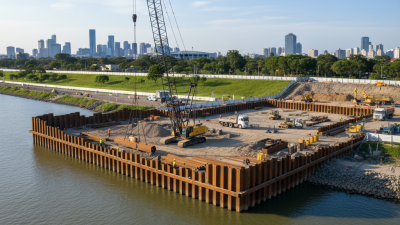
Steel Sheet Pile remains a practical choice for retaining walls, cofferdams, quay extensions, flood barriers, and deep excavation support. Its interlocking profile creates a continuous steel wall, often with fewer separate components than concrete systems. On a crowded construction site, that can mean faster installation, cleaner logistics, and less disruption near water or existing structures.

The World Steel Association reported approximately 1.89 billion tonnes of crude steel production in 2023. This scale supports a broad manufacturing base, but volume alone does not prove quality. Buyers must examine section modulus, yield strength, interlock performance, coating options, straightness, and weldability. EN 10248 and related project specifications provide useful references for hot-rolled sheet piling, while ASTM requirements may apply to North American projects. Certification matters. So does traceability.

This guide reviews 10 Best Steel Sheet Pile Manufacturers for Global Buyers through a procurement-focused lens. It considers production capacity, export experience, technical documentation, inspection procedures, customization, and after-sales support. A reliable supplier should provide mill test certificates, dimensional records, and clear delivery terms. Independent inspection can reduce uncertainty before loading begins.

No ranking is flawless. Project conditions vary.

A manufacturer suited to a river cofferdam may not fit a corrosive marine terminal. Price can also mislead when freight, splicing, coatings, or rejected sections appear later. Buyers should compare like-for-like specifications and request recent project evidence. The strongest choice is not always the largest mill. It is the supplier that can repeatedly deliver compliant Steel Sheet Pile, on schedule, with documentation engineers can trust.
10 Best Steel Sheet Pile Manufacturers for Global Buyers

What Defines a Leading Steel Sheet Pile Manufacturer

A leading steel sheet pile manufacturer starts with measurable process control, not polished brochures. The World Steel Association reported 1.89 billion tonnes of crude steel production in 2023. That scale makes consistency difficult. Buyers should examine mill certificates, heat numbers, chemical composition, yield strength, and impact results. Independent testing should confirm results before shipment. Profiles must meet standards such as EN 10248 or ASTM A572, with tolerances clearly recorded. A reliable producer links each bundle to its heat, rolling date, inspection file, and loading photographs. Small details matter.

Site experience reveals the difference. Engineers compare section modulus, interlock performance, driving resistance, and expected deflection against project designs. The Global Infrastructure Hub estimates global infrastructure investment needs at approximately 94 trillion dollars through 2040. This demand rewards factories that maintain dimensions across long production runs. Useful suppliers explain welding repairs, surface defects, coating options, and storage limits without hiding weak points. They provide realistic lead times and contingency plans. I would still question any claim of zero defects. Variation remains. Steel production has variables, and honest reporting is more credible than perfection. A practical audit should include witnessed inspection, sample measurement, and previous export documentation.
(Sources: World Steel Association, World Steel in Figures 2024; Global Infrastructure Hub, Global Infrastructure Outlook.)

Key Criteria for Evaluating Global Steel Sheet Pile Suppliers

10 Best Steel Sheet Pile Manufacturers for Global Buyers

Selecting a steel sheet pile supplier requires more than comparing prices. Buyers should examine production experience, engineering knowledge, and documented quality controls. A reliable manufacturer can explain section modulus, steel grade, interlock performance, and expected driving conditions clearly. Ask for recent mill certificates, dimensional inspection reports, and coating records. A polished website is not proof.

Production capacity also matters. Confirm monthly output, rolling capabilities, forming limits, and stock availability before signing a contract. Check whether the supplier can maintain consistent thickness, straightness, and interlock fit across large batches. Export experience is equally important. Review packaging methods, loading photographs, delivery schedules, and communication procedures. I have seen attractive quotations fail because lead times were too optimistic. That risk deserves attention.

Tips: Request a small sample or trial section when practical. Compare independent test results, not only supplier claims. Ask for references from projects using similar soil, water, and driving equipment. Clarify how damaged sections, dimensional deviations, and late shipments will be handled. Also verify that the supplier understands your required standards and project documentation. Some buyers overlook after-sales engineering support. That can become expensive when pile installation meets unexpected ground resistance.

10 Best Steel Sheet Pile Manufacturers for Global Buyers

Key Technical Benchmark for Evaluating Global Steel Sheet Pile Suppliers

Minimum yield strength is a practical technical benchmark when comparing international steel sheet pile suppliers. The reference values shown are based on commonly specified grades in EN 10248, JIS A 5528, and ASTM A572. Buyers should also verify chemical composition, dimensional tolerances, certification, production capacity, delivery performance, and project-specific compliance.

Profiles of the 10 Best Steel Sheet Pile Manufacturers

The ten profiles below examine steel sheet pile manufacturers through production depth, quality control, delivery experience, and engineering support. Manufacturer 1 specializes in hot-rolled sections for ports and deep excavations. Its mill data should include yield strength, impact performance, and dimensional tolerances. Manufacturer 2 focuses on cold-formed piles for lighter retaining walls. Buyers should check local buckling resistance before choosing this option. Manufacturer 3 offers interlocking systems with careful seam control. Small alignment errors can create major installation problems. Manufacturer 4 combines piling production with coating services for aggressive marine environments. Coating thickness records matter more than attractive product photographs.

Manufacturer 5 supports large infrastructure projects with high-volume output and scheduled shipping. Its value depends on realistic lead times, not optimistic promises. Manufacturer 6 supplies custom lengths and corner sections for complex layouts. Clear drawings reduce costly site changes. Manufacturer 7 maintains laboratories for tensile testing, weld inspection, and chemical analysis. Independent reports add confidence. Manufacturer 8 serves contractors needing temporary and reusable piles. Its engineers should explain extraction risks and handling limits. Manufacturer 9 provides regional stock, which can shorten urgent deliveries. However, stored steel needs inspection for corrosion and deformation. Manufacturer 10 combines technical consultation with installation guidance. That support becomes useful when soil conditions differ from early surveys.

Experienced buyers compare sample certificates, factory audits, reference projects, and after-sales responses. They also review packing methods, lifting points, and documentation accuracy. A manufacturer may perform well in one market but lack suitable logistics elsewhere. That is an important weakness to admit. The strongest profile is not always the cheapest one. It is the supplier whose claims can be checked against measurable evidence, site experience, and consistent communication.

10 Best Steel Sheet Pile Manufacturers for Global Buyers - Profiles of the 10 Best Steel Sheet Pile Manufacturers

Rank Anonymous Manufacturer Profile Primary Manufacturing Route Typical Sheet Pile Profiles Common Steel Grades Applicable Standards Typical Length Range Buyer-Focused Strength Recommended Verification Documents
1 Profile A — Large Integrated Mill Hot rolling from steel slabs or billets U-shaped, Z-shaped, and combined wall sections S355GP, S430GP, ASTM A572 Grade 50 EN 10248, ASTM A328, ASTM A572 6–24 m, subject to rolling and transport limits High production capacity and stable mechanical properties Mill test certificate, dimensional inspection report, heat number traceability
2 Profile B — European Section Specialist Hot rolling with interlock-controlled section production Larssen-type Z sections and U sections S270GP, S355GP, S430GP EN 10248-1, EN 10248-2 8–30 m, including welded extensions where permitted Reliable interlock geometry for permanent retaining structures Interlock strength test, section properties, chemical composition report
3 Profile C — North American Project Supplier Hot rolling and project-based fabrication U-shaped and Z-shaped sheet piles ASTM A328, ASTM A572 Grade 50, ASTM A690 ASTM A328, ASTM A572, ASTM A690 20–80 ft, with project-specific cutting available Strong alignment with North American engineering specifications ASTM compliance certificate, weld procedure qualification, coating records
4 Profile D — High-Strength Marine Supplier Hot rolling with corrosion-conscious material selection Z sections, U sections, and box-type combined walls S355GP, S430GP, ASTM A690 EN 10248, ASTM A690, project marine specifications 10–26 m, depending on handling and vessel limitations Suitable options for quay walls, cofferdams, and waterfront works Saltwater exposure assessment, coating specification, corrosion allowance calculation
5 Profile E — Cold-Formed Light Section Producer Cold forming from hot-rolled steel coil Light-gauge U, Z, and straight-web sections S250GD, S350GD, structural carbon steel grades EN 1993-5 design principles, EN 10346 for coated feedstock where applicable 3–15 m, commonly supplied for temporary or low-load applications Lower weight and efficient transport for temporary works Coil certificate, forming tolerance report, coating mass certificate
6 Profile F — Temporary Works Specialist Hot rolling, stock management, and refurbishment Reusable U and Z sheet piles S270GP, S355GP, equivalent structural grades EN 10248 and project-specific temporary works requirements 6–18 m, with cutting, splicing, and straightening options Cost-effective supply for excavation support and cofferdams Used-pile inspection report, residual thickness measurement, repair records
7 Profile G — Combined Wall System Fabricator Hot-rolled sheet piles combined with welded tubular elements Z piles, king piles, pipe piles, and connector elements S355GP, S430GP, S460-grade structural steels where specified EN 10248, EN 10219 for structural hollow sections where applicable 12–35 m, depending on combined wall design High bending resistance for deep excavation and marine structures Welding procedure specification, NDT report, geometry and straightness report
8 Profile H — Galvanized and Coated Product Supplier Hot rolling followed by galvanizing or protective coating U and Z sections for exposed or corrosion-sensitive applications S355GP, ASTM A572 Grade 50, coating-compatible structural grades EN 10248, EN ISO 1461, ISO 12944 where applicable 6–20 m, subject to coating line and transport capacity Improved surface protection for atmospheric exposure Coating thickness report, surface preparation record, adhesion inspection
9 Profile I — Custom Engineering and Fabrication Partner Standard section production with project-specific fabrication U, Z, straight-web, corner, and junction sections S355GP, S430GP, ASTM A572 Grade 50 EN 10248, ASTM A328, project structural specifications 6–25 m, with prefabricated panels available by design Adaptable supply for unusual layouts and restricted work sites Approved fabrication drawings, weld maps, dimensional control plan
10 Profile J — Export-Oriented Stock and Logistics Supplier Standard hot-rolled production supported by international stockholding Common U and Z profiles in standard lengths S270GP, S355GP, ASTM A328-compatible grades EN 10248, ASTM A328, ISO 9001 quality systems where certified 6–24 m, with cut-to-length service subject to order quantity Shorter lead times and consolidated export shipments Packing list, commercial invoice, certificate of origin, mill test certificate

Note: Steel grades, profile availability, dimensions, coatings, and certification scope should be confirmed against the supplier’s current technical documentation and the project engineer’s specifications before purchase.

Comparing Product Range, Quality, Capacity, and Certifications

10 Best Steel Sheet Pile Manufacturers for Global Buyers

Comparing Product Range, Quality, Capacity, and Certifications

A strong manufacturer should offer more than one sheet pile profile. Look for U-shaped and Z-shaped sections, corner elements, tie rods, and interlocking accessories. Product depth matters when projects face soft soil, high water pressure, or restricted driving space. The World Steel Association reported 1.89 billion tonnes of crude steel production in 2023. This scale creates choice, but not consistent quality. Buyers should compare yield strength, section modulus, coating options, and dimensional tolerances across actual mill certificates.

Capacity requires practical evidence. Ask for annual rolling output, available lengths, welding capability, and delivery records for similar projects. A large catalogue proves little. Production schedules, inspection plans, and export packaging reveal more. For quality control, EN 10248, ASTM A328/A328M, and EN 10204 inspection documents provide useful reference points. ISO 9001 supports process control, while ISO 14001 and ISO 45001 indicate environmental and occupational systems. Certifications still need verification. Certificates can be valid yet poorly applied.

Carbon performance deserves attention. The International Energy Agency identifies iron and steel as responsible for about 8% of global energy-related emissions. Requesting recycled-content data, energy intensity, and emissions reporting is increasingly sensible. No scorecard is perfect. A manufacturer may offer excellent steel but weak documentation, or fast delivery with limited profile selection. Compare independent test reports, traceability records, and customer references before ranking suppliers. Photographs help. Test results matter more.

How Global Buyers Can Select the Right Manufacturer

Selecting the right steel sheet pile manufacturer starts with project conditions, not catalog promises. Record wall length, section modulus, soil profile, water level, driving method, and expected loads. A reliable supplier should explain how its sections fit these inputs. Ask for current mill certificates, chemical composition, yield strength, dimensional tolerances, and independent test records. Documents matter.

Production experience appears in practical details. Check whether the manufacturer controls rolling, straightness inspection, coating application, and heat-number traceability. Request sample inspection reports, not polished photographs. For marine or contaminated ground, discuss corrosion allowance and coating performance using site-specific exposure data. Confirm interlock geometry and trial-driving support; a small mismatch can delay an entire installation. That risk is easy to underestimate.

Commercial reliability deserves equal attention. Compare realistic lead times, production capacity, export packing, port handling, country-specific import documents, and replacement procedures. A low quotation may exclude testing, tooling, freight, or handling losses. Ask for named quality contacts and recent project references in similar soil and water conditions. Review payment terms and dispute procedures with legal and engineering teams. I would also request a small pre-production sample. It costs time, but assumptions often fail at full scale. That is uncomfortable, but useful.