Who Are the Top Metal Coil Suppliers in China?
Choosing a Metal Coils supplier in China takes more than comparing prices. Buyers need to check product consistency, available grades, coating options, and delivery reliability. A low quote can look attractive. It may not tell the whole story.
Quality expert W. Edwards Deming said, “Quality is everyone’s responsibility.” That principle matters when evaluating coil suppliers. Ask how they control thickness, surface finish, and packaging. Request recent test documents and sample specifications. Look for clear answers, not polished promises. Small details count, such as edge protection on a coil or moisture barriers inside export packaging.
This guide will examine how to compare leading Chinese suppliers, what products they offer, and which questions help reveal real capabilities. It will also consider production capacity, quality systems, customization, and customer support. Supplier rankings can be useful. They are not a substitute for checking current credentials and matching a company’s strengths to your needs. A supplier with an impressive catalog may still be a poor fit for a specific project. That is easy to overlook. Selection criteria should be transparent, and claims should be verified directly. The market changes, and a tidy ranking can miss important differences.
China’s 1.019 Billion Tonnes of 2023 Steel Output (Worldsteel)
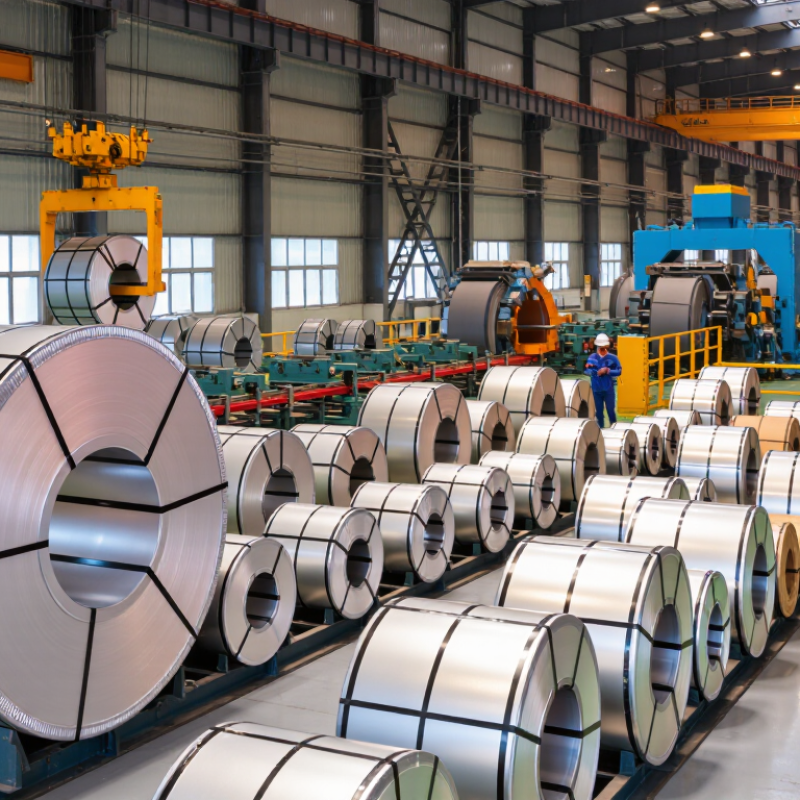
China produced 1,019.1 million tonnes of crude steel in 2023, according to the World Steel Association’s 2023 production data. That was about 54% of the world total of 1,892.2 million tonnes. The scale is striking. Yet crude steel output is not the same as ready-to-ship coil volume. Buyers comparing Chinese suppliers should check whether a company operates a steel mill, processes purchased steel, or does both.
For coil sourcing, production figures are only a starting point. Ask for the grade, thickness and width tolerances, coating details, and recent inspection records. A sample coil may look uniform, but edge condition and surface finish can affect slitting and forming on the factory floor. Confirm monthly capacity and delivery terms in writing, too. One detail is easy to overlook: large national output does not guarantee a supplier has the exact specification available.
Tip: Compare suppliers using the same specification sheet, then review test certificates and sample measurements. Worldsteel’s figure describes national crude steel production, not any individual supplier’s coil capacity. That distinction matters, and it is worth checking twice.
Major Chinese Coil Suppliers: Baosteel, Ansteel, HBIS and Shagang
China’s major coil supply base includes four large integrated steel groups with broad production footprints. The World Steel Association’s World Steel in Figures 2024 reports that four leading Chinese producers together made about 269.3 million tonnes of crude steel in 2023. That scale supports extensive hot-rolled and cold-rolled output, but crude-steel tonnage is not a coil-availability figure. Check the mill’s product range and current delivery schedule.
Their strengths differ. Some mills serve automotive and appliance buyers with tighter thickness control and surface requirements. Others offer broad construction and industrial grades, with high-volume production and established export logistics. Ask for coil width, thickness tolerance, coating weight, edge condition, and packaging details. Small differences matter.
The report’s figures describe steelmaking, not each group’s quality performance or shipment reliability. Buyers should request recent inspection certificates and confirm the applicable grade standard before placing orders. A trial coil can reveal shape, surface marks, and handling damage that a datasheet cannot.
That step is easy to overlook.
Supplier comparisons should also include minimum order quantities, lead times, and port arrangements, since these can change the landed cost substantially.
Hot-Rolled, Cold-Rolled and Coated Coils: Key Product Differences
Hot-rolled coil is shaped above steel’s recrystallization temperature, leaving a visible mill-scale surface and generally looser dimensional tolerances. It suits structural frames, brackets, and parts where a smooth finish is not essential. Cold-rolled coil is reduced further below that temperature. The result is a smoother surface, more consistent thickness, and better suitability for formed panels or visible components. ASTM A1011 and A1008 set distinct requirements for hot-rolled and cold-rolled sheet, respectively; buyers should compare the actual grade and tolerance, not just the process name. Surface matters.
Coated coil adds a protective layer, often zinc, to help slow corrosion. ASTM A653/A653M defines galvanized sheet coating designations; for example, G90 represents 0.90 ounces of zinc per square foot across both sides, about 275 grams per square metre. That figure is a coating mass, not a promise of service life: cut edges, exposure, and maintenance all affect performance. The World Steel Association reported 1,892.2 million tonnes of crude steel production in 2023 in World Steel in Figures 2024, a reminder of the scale behind steel supply. Yet high output does not make coils interchangeable. A small mismatch in thickness, surface finish, or coating can complicate forming and painting. Check the specification sheet. I would still verify coating and tolerances against the delivered coil.
Typical quoted nominal thickness ranges are shown for comparison: hot-rolled coil, 1.2–25.4 mm; cold-rolled coil, 0.3–3.0 mm; and coated coil, 0.3–3.0 mm. Actual availability varies by mill, product standard, and coating specification. These ranges describe product types, not supplier rankings.
China’s 90.3 Million Tonnes of 2023 Steel Exports (China Customs)
Who Are the Top Metal Coil Suppliers in China?
China’s 90.3 Million Tonnes of 2023 Steel Exports (China Customs)
China’s General Administration of Customs recorded about 90.264 million tonnes of steel product exports in 2023. That figure signals substantial production and export capacity, but it does not show how much was coil. It also cannot rank individual suppliers. A buyer should treat it as market context, not a quality guarantee. The distinction matters.
World Steel Association data puts China’s 2023 crude steel output at about 1,019 million tonnes. That scale supports a broad coil market, from hot-rolled base material to coated sheet. Yet export totals say little about a particular coil’s thickness tolerance, surface finish, or consistency between batches. Ask for current test certificates and confirm the stated grade, dimensions, coating mass, and packaging details. Look closely at the edges and wrapping; moisture damage can begin during transit. Small details matter.
For supplier comparisons, check whether quoted specifications match the intended forming or fabrication process. Request traceable inspection records and sample results where practical. A low price may look convincing. It may not include the same coating, tolerances, or export packing. Customs data is useful, but limited; the actual order documents deserve closer attention.
Who Are the Top Metal Coil Suppliers in China? - China’s 90.3 Million Tonnes of 2023 Steel Exports (China Customs)
China steel trade snapshot, 2023. The figures below cover steel products overall, not metal coils alone; they provide market context and do not rank individual suppliers.
| Indicator |
2023 figure |
Unit / description |
| Steel product exports |
90.264 million |
Tonnes |
| Steel product imports |
7.645 million |
Tonnes |
| Net exports |
82.619 million |
Tonnes; exports minus imports |
| Exports-to-imports ratio |
11.8 : 1 |
Calculated from reported export and import volumes |
Source: General Administration of Customs of China (China Customs), 2023 steel product trade statistics. Net exports and the ratio are calculated from the listed figures.