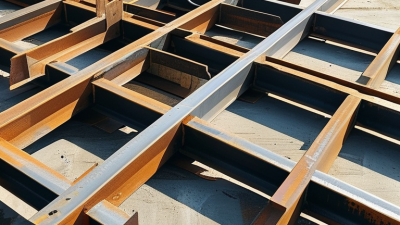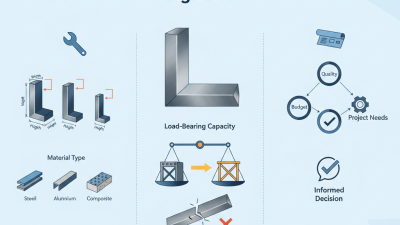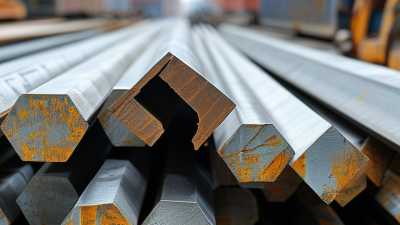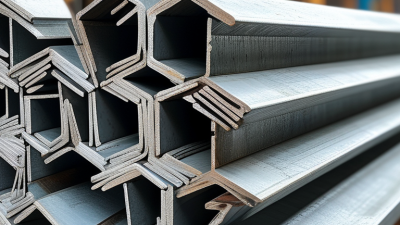
Choosing China’s top Angle Bar manufacturers requires more than comparing prices on a supplier directory. The right partner should combine stable steel quality, dependable production, and clear technical communication. A serious manufacturer can explain its material grades, dimensional tolerances, testing methods, and surface treatments without avoiding specific questions. Look for experience with construction frames, transmission towers, machinery bases, and other demanding applications. Factory photographs help, but they are not proof. An on-site audit, live video inspection, or independent assessment provides stronger evidence.
Request recent mill certificates and test reports before approving a purchase. Check whether the documents match the offered steel grade and relevant standards, such as ASTM, EN, or GB requirements. Confirm production capacity, minimum order quantity, sample policy, packaging details, and realistic delivery times. A reliable factory should also describe how it controls straightness, hole placement, cutting accuracy, and corrosion protection. Ask for customer references when possible. Their feedback may reveal delays or communication problems that sales materials hide.
No supplier is perfect. That matters.
A low quotation can become expensive when tolerances fail or shipment schedules change. During evaluation, compare complete costs rather than unit price alone. Review inspection records, traceability procedures, payment terms, and after-sales support. It is also wise to begin with a small trial order, even when the manufacturer appears highly qualified. This approach tests actual performance under commercial conditions. The best choice is not always the largest factory. It is the manufacturer that consistently meets documented requirements, responds honestly, and improves when a problem is discovered. Industry claims should be verified, not simply repeated.
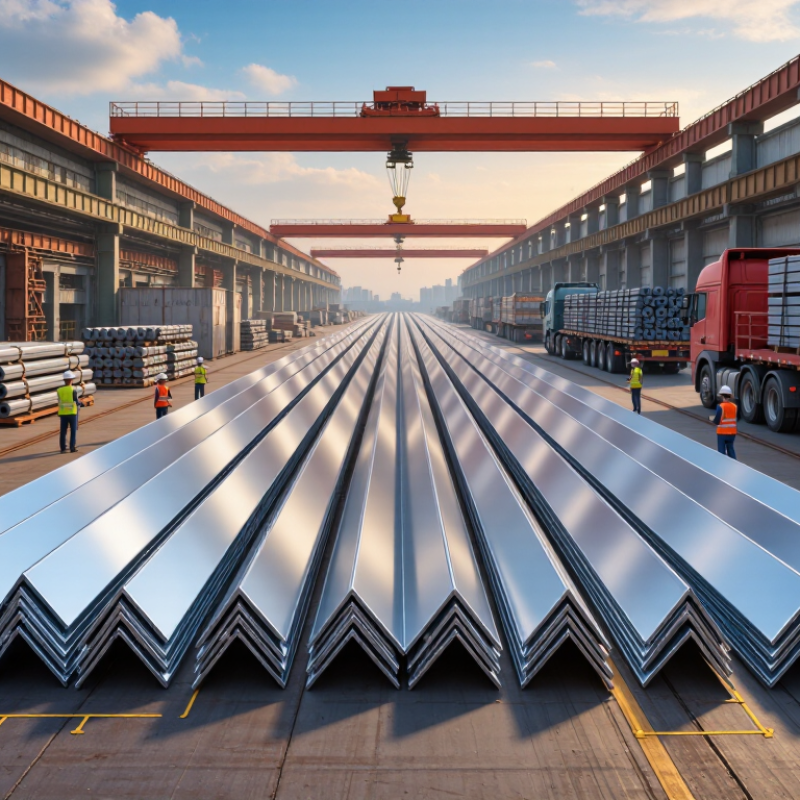
How to Choose China Top Angle Bar Manufacturers
Defining your angle bar specifications is the practical starting point. Record the equal or unequal leg dimensions, thickness, length, steel grade, and required quantity. A 50 × 50 × 5 mm equal angle is not interchangeable with a 60 × 40 × 5 mm unequal angle. Confirm whether the bars will support frames, warehouse racks, towers, or general fabrication. Each use creates different loading and connection requirements.
Consider the operating environment carefully. Indoor dry storage may need basic surface protection, while coastal or humid sites often require stronger corrosion resistance. State the cutting tolerance, straightness tolerance, hole locations, and acceptable surface condition. Clarify whether you need mill length or fixed lengths. Small details matter. I have seen projects lose time because drawings showed metric dimensions, while purchase notes used rounded conversions.
Before comparing Chinese manufacturers, prepare a clear technical sheet. Include the applicable material standard, inspection requirements, packaging method, marking details, and delivery destination. Ask for heat numbers, material certificates, test reports, and sample approval before production. Traceability should connect each bundle to its production records. It is easy to request perfect steel on paper. The harder question is whether the supplier can repeat that quality across several shipments. Check production capacity, quality-control procedures, communication speed, and their response to specification changes. A factory may offer a lower price, yet unsuitable tolerances can create expensive rework on site.

Choosing a China angle bar manufacturer requires more than comparing prices.
Inspect quality systems, certificates, and production evidence together. Ask for ISO 9001 records, but verify the certificate scope and expiration date. Product standards may include GB, EN, or ASTM requirements. The correct standard depends on your project. Request recent mill test certificates for actual heats, not generic samples. Check chemical composition, yield strength, tensile strength, elongation, and dimensional tolerances. Small details matter.
A capable factory should explain its rolling, straightening, cutting, and packing processes clearly. Ask about furnace control, billet traceability, and in-process inspections. Walk through the line when possible. Look for calibrated gauges, marked bundles, and heat numbers that remain readable after handling. Production capacity needs proof. Compare monthly output with your order size, required sections, and delivery window. Confirm whether galvanizing, drilling, or custom cutting is performed internally or subcontracted. Subcontracting is not automatically a weakness, but unclear responsibility is.
Request dimensional samples before approving a purchase. Measure leg length, thickness, straightness, and surface condition independently. An inspection agency can witness loading and review test records. Check references from similar applications, not only large export figures. A polished factory tour can still hide weak documentation. No supplier is flawless; missed tolerances sometimes happen. What matters is transparent correction, root-cause analysis, and replacement procedures. Choose the manufacturer that can prove consistency, communicate limits, and accept reasonable scrutiny.
Choosing a top China angle bar manufacturer starts with material evidence, not a polished website. China produced about 1.02 billion tonnes of crude steel in 2023, according to World Steel in Figures 2024. Large output does not guarantee consistent angle bars. Request heat numbers, mill certificates, and third-party test results. Compare Q235B and Q355B under GB/T standards, or equivalent ASTM and EN grades. Q355B offers higher yield strength, but it may cost more and require stricter forming control.
Size comparison needs precision. Check equal or unequal legs, thickness, length, straightness, and permitted tolerances. Ask whether cutting, drilling, slotting, welding preparation, or hot-dip galvanizing is available. These services can reduce workshop labor, yet they can also increase lead time. Price quotes should state steel grade, weight calculation, packing, inspection, and shipping terms. Compare EXW, FOB, and CIF prices on the same basis. The World Bank’s Pink Sheet shows that steel-related commodity prices change regularly, so record the quotation date and validity period. A cheap quote can become expensive after corrections.
Tips: Ask for a trial batch before placing a large order. Measure leg width and thickness at several points. Verify coating thickness if corrosion protection matters. I would not rely on one certificate alone. Factory audits, production photos, and live video checks add useful evidence, though none replaces independent inspection. Custom drawings should include hole diameter, spacing, corner radius, and tolerance limits. Small omissions cause surprisingly large rework costs.
How to Choose China Top Angle Bar Manufacturers
A reliable angle bar manufacturer should show more than a polished website. Ask when the factory began producing structural steel and which markets it serves. Request production photos, recent inspection records, and customer references from comparable projects. A short video call can reveal whether machinery, workers, and storage areas match the claimed factory capacity.
Delivery capacity deserves careful checking. Ask for monthly output, current order volume, and a realistic production schedule. A responsible supplier explains cutting, drilling, galvanizing, packing, and loading times clearly. Visit the plant if possible. Look for raw material identification tags, organized bundles, calibrated measuring tools, and visible quality checks. Small details matter. However, capacity figures can change during peak seasons. Confirm them in writing before placing an order.
Export services can prevent costly delays. Check whether the manufacturer prepares commercial invoices, packing lists, certificates of origin, and inspection documents accurately. Discuss packaging for long sea journeys, including steel straps, separators, moisture protection, and clear bundle marks. Confirm experience with your destination port and preferred trade terms. Ask who handles questions after shipment leaves the factory. Prompt replies are useful evidence of reliability, but they are not proof alone. One weakness in my own supplier evaluations has been trusting fast communication too much. A better review combines factory evidence, delivery records, technical documents, and references.
| Evaluation Dimension | Recommended Verification Benchmark | Documents or Evidence to Request | Suggested Weight | Warning Signs |
|---|---|---|---|---|
| Factory Experience | At least 5 years of documented angle bar production or regular structural steel production. | Business license, production history, equipment list, dated factory photographs, and recent production records. | 15% | No verifiable factory address, inconsistent company history, or dependence on an undisclosed subcontractor. |
| Product Range | Capability to supply equal and/or unequal angles in the required steel grade, thickness, length, and finish. | Current size chart, tolerances, material grades, sample inspection report, and production capability statement. | 10% | Product lists without dimensional tolerances, unclear steel grades, or inability to provide samples. |
| Material Standards | Material must match the purchase specification, such as GB/T 700, GB/T 1591, ASTM A36, ASTM A572, or EN 10025-2 where applicable. | Mill test certificate, heat number, chemical composition, mechanical test results, and applicable standard edition. | 15% | Generic certificates, missing heat numbers, or test data that does not correspond to the supplied batch. |
| Dimensional Quality | Section dimensions, thickness, straightness, length, and surface condition should comply with the agreed product standard and tolerance range. | In-process inspection plan, final inspection report, calibrated measurement records, and third-party inspection option. | 15% | Visible twisting, excessive rust, uneven legs, sharp defects, or refusal to accept independent inspection. |
| Production Capacity | Capacity should be demonstrated against the buyer’s monthly volume, required sizes, and shipment schedule rather than stated as a general annual figure. | Monthly capacity by size, current production schedule, equipment capacity, raw material availability, and capacity reservation plan. | 10% | Large capacity claims with no supporting schedule, long queue times, or frequent raw-material shortages. |
| Delivery Reliability | A strong supplier should demonstrate approximately 95% or higher on-time delivery performance over a documented 12-month period. | Anonymized delivery records, production lead-time history, shipment schedules, and corrective-action records for delays. | 10% | Repeated unexplained delays, unclear production completion dates, or no documented delivery history. |
| Export Documentation | Ability to prepare commercial invoices, packing lists, bills of lading, certificates of origin, mill certificates, and required compliance documents. | Redacted sample export document set, customs experience, Incoterms quotation, and document-control procedure. | 10% | Incorrect document details, missing certificates, or inability to support the buyer’s destination-country requirements. |
| Packaging and Loading | Bundles should be securely strapped, clearly marked, protected from avoidable transport damage, and loaded according to the agreed weight plan. | Packing specification, bundle-marking sample, loading photographs, container plan, and weight-control records. | 5% | Loose bundles, unreadable marks, unprotected ends, or container loading that does not match the packing list. |
| Quality Management | A documented quality system, preferably supported by a current ISO 9001 certificate issued by an accredited certification body. | Valid certificate, scope of certification, inspection procedures, nonconformance records, and corrective-action process. | 5% | Expired certificate, certification scope unrelated to steel products, or no traceable complaint process. |
| Commercial and Technical Support | Quotation should clearly state grade, size, tolerance, quantity, production lead time, Incoterm, payment terms, and inspection conditions. | Detailed quotation, technical data sheet, drawing review record, response-time commitment, and warranty or claim procedure. | 5% | Lowest-price-only quotations, vague specifications, slow technical responses, or unclear responsibility for claims. |
| Total Recommended Evaluation Weight | 100% | Select suppliers with verified evidence, not claims alone. | ||
Choosing a China angle bar manufacturer requires more than comparing a quoted price. In final evaluation, verify production evidence, not polished promises. Request mill test certificates for grade, yield strength, tensile strength, and chemical composition. Match these records with independent test results when the project carries serious structural responsibility. Inspect samples with calipers. Check leg width, thickness, straightness, corner shape, and surface condition. A small mismatch matters. Ask how rejected material is separated and recorded.
A dependable supplier should explain its process clearly, from billet sourcing to cutting, drilling, galvanizing, and packing. Review equipment photos, inspection logs, and batch traceability documents. A remote factory tour helps, but an on-site audit offers stronger evidence. Confirm whether quality staff control incoming steel and final dimensions. Also examine packaging details. Bundled bars need dry wrapping, edge protection, and readable labels. Rust marks inside damaged bundles can create expensive delays.
Commercial behavior is part of reliability. Compare realistic lead times, minimum order quantities, payment milestones, replacement procedures, and communication speed. Put technical tolerances and delivery conditions in writing. I once focused too heavily on a low quotation and overlooked weak packing instructions. That choice created avoidable rework. A better evaluation uses a trial order, measurable acceptance criteria, and documented corrective actions. No supplier is perfect. What matters is whether the manufacturer admits defects, investigates causes, and changes the process. Ask difficult questions before the first full shipment.