Leave Your Message

7 Tips for Buying Channel Steel in Bulk?

Buying Channel Steel in bulk is not simply a volume negotiation. It is a quality, logistics, and risk decision. The World Steel Association’s World Steel in Figures 2024 reports global crude steel production of about 1.89 billion tonnes in 2023. That scale shows the market’s depth, but it does not guarantee consistent profiles, grades, or delivery performance. Large supply does not remove purchasing uncertainty.

Market pressure matters. The OECD’s Steel Market Developments report highlights uneven demand and continuing concerns about global steel overcapacity. Prices may look attractive today, then change before your shipment leaves the mill. A cheaper quote can mislead. Buyers should compare the complete landed cost, including cutting, packing, inland transport, port charges, testing, and storage.

This guide presents seven practical tips for bulk purchasing. They cover section dimensions, steel grade, applicable standards, mill certificates, surface condition, supplier verification, and delivery planning. In practice, a small dimensional error can complicate welding or create installation gaps across hundreds of metres. Check the actual specification, not only the product photo. ASTM A6/A6M, EN standards, or project-specific requirements may apply, depending on the destination and application. Certificates also deserve careful review. Heat numbers, chemical results, mechanical properties, and inspection records should match the delivered bundles. Some advice sounds obvious. It is still often skipped. A disciplined buyer measures twice, challenges vague claims, and treats reliability as part of the product—not an optional extra.
7 Tips for Buying Channel Steel in Bulk?

Define Your Channel Steel Requirements and Project Specifications

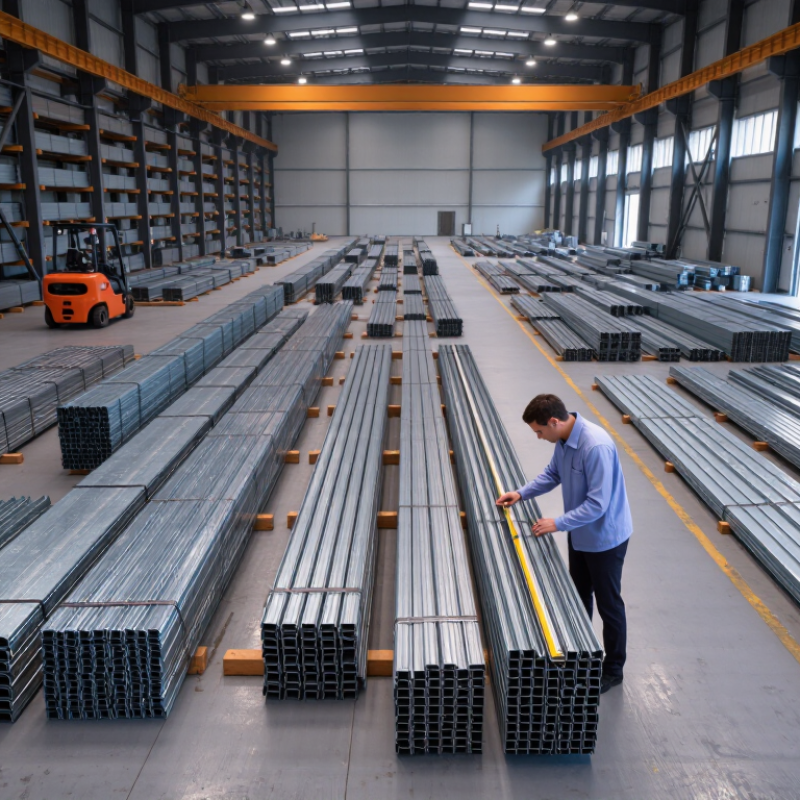
Tip 1: Define the structural purpose before requesting bulk channel steel. Record the required section size, thickness, length, grade, and estimated quantity. Include span, support spacing, applied loads, and connection details. These factors affect strength, deflection, and material efficiency. A beam used for framing needs different specifications from one used for bracing or equipment support.

Tip 2: Prepare a clear project specification sheet. List acceptable dimensional tolerances, surface condition, straightness, cutting requirements, and hole locations. State whether the steel will be welded, bolted, painted, or galvanized. Small omissions can create expensive rework. I have seen purchasing teams focus on price while overlooking mill certificates and traceability. That decision often creates delays during inspection.

Tip 3: Confirm the technical standard and documentation before placing a large order. Ask for test reports, heat numbers, chemical composition, mechanical properties, and inspection records. Compare the supplier’s proposed profile with your drawings, not just the product name. “Channel steel” can describe several shapes and sizes. Measure twice.

Allow room for cutting loss, damaged pieces, and future adjustments. However, ordering excessive stock may increase storage costs and handling risks. An engineer or qualified fabricator should review load assumptions and connection details. Even experienced buyers can miss a tolerance issue when schedules become tight. Clear requirements make quotations easier to compare and reduce costly surprises.
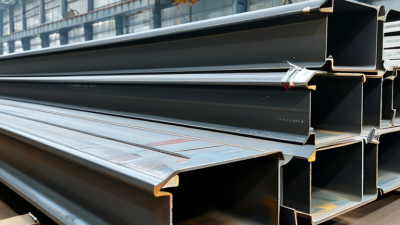
Define Your Channel Steel Requirements and Project Specifications

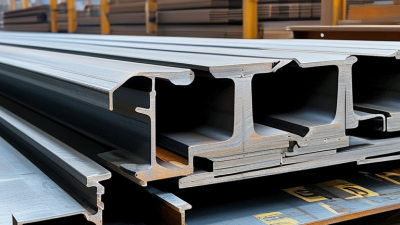
Before buying channel steel in bulk, confirm the required section size, length, grade, corrosion protection, and total quantity. The chart below compares nominal UPN channel sizes by typical mass per metre, which helps estimate shipping weight and material requirements during project planning.

Typical mass values are shown in kilograms per metre for commonly specified UPN sections. Final purchasing specifications should be verified against the applicable steel standard, project drawings, and supplier mill certificates.

Compare Steel Grades, Sizes, and Surface Treatment Options

Buying channel steel in bulk starts with a clear comparison, not the lowest quote. Specify grade by yield strength, tensile strength, carbon content, and weldability. A higher-strength grade may reduce weight, but it can require different welding controls. Ask for current mill certificates, heat numbers, and test results for each lot. Do not accept “equivalent grade” wording without written technical confirmation.

Compare sizes by depth, flange width, thickness, and length tolerance. A drawing may show nominal dimensions, while the delivered section varies slightly. Check load calculations with a qualified engineer, especially for columns, frames, or lifting supports. Measure sample pieces before approving a full shipment. Small errors multiply quickly. Also review bundle weight, cutting loss, storage space, and transport limits. This is where bulk savings sometimes disappear.

Surface treatment should match the service environment. Hot-dip galvanizing suits humid or outdoor exposure, while primer systems may fit controlled indoor conditions. For painted steel, confirm surface preparation, coating thickness, and repair procedures after cutting. Oiled surfaces can protect briefly, but they are not a permanent corrosion solution. Specify inspection points, packaging, and moisture protection in the purchase agreement. I would also allow a small contingency for rejected pieces. That detail is easy to overlook.

Evaluate Suppliers, Manufacturing Standards, and Quality Certifications

Buying channel steel in bulk demands more than a competitive quotation. The World Steel Association reported 1,888.2 million tonnes of crude steel production in 2023. That scale creates choice, but also inconsistent supplier performance. Request production records, furnace details, monthly capacity, and recent export experience. Verify whether the mill or trading company actually controls production. A polished website proves little.

Check the governing standard before comparing prices. ASTM A6 covers general requirements for rolled structural shapes, while ASTM A36 specifies minimum yield strength for many carbon steel applications. European projects may require EN 10219 or EN 10025. Ask for a material test certificate under EN 10204 Type 3.1. It should show heat number, chemical composition, tensile results, yield strength, elongation, and dimensional checks. ISO 9001 certification supports process control, but certification is not product approval. The ISO Survey 2023 recorded more than 1.26 million ISO 9001 certificates worldwide. Quantity does not equal quality.

Inspect samples before releasing the full order. Measure flange width, web height, thickness, straightness, and corner condition. Compare the heat number on the bundle with the certificate. Missing traceability is a serious warning. It can be overlooked during a rushed purchase. That is a mistake. Independent inspection can verify ultrasonic testing, coating thickness, packing, and loading records when risk justifies the cost. Keep tolerances, test methods, and rejection rules in the purchase contract. Cheap steel may become expensive after cutting losses, delays, or rework. I would still question any supplier offering perfect consistency without recent inspection evidence.

7 Tips for Buying Channel Steel in Bulk? - Evaluate Suppliers, Manufacturing Standards, and Quality Certifications

Tip Evaluation Dimension Recommended Requirement Evidence or Data to Request Bulk-Buying Benchmark
1 Confirm the required channel specification Define section designation, nominal dimensions, thickness, steel grade, length, surface condition, and applicable market standard before requesting quotations. Approved drawing, purchase specification, material grade, dimensional tolerance standard, and required cut-length tolerance. 100% of quotation lines include complete technical details
2 Check manufacturing capability Select a supplier with suitable hot-rolling or cold-forming equipment, controlled straightening, cutting, bundling, and traceability processes. Process flow chart, equipment list, production capacity, quality-control plan, and sample inspection records. Capacity should cover the order within the agreed delivery window
3 Verify applicable manufacturing standards Match the product and grade to the correct standard. Common references include ASTM A6/A6M for general structural-shape requirements, ASTM A36/A36M or ASTM A572/A572M for specified steel grades, EN 10025-2 for hot-rolled structural steels, and GB/T 707 for hot-rolled section dimensions. Standard edition, product test certificate, dimensional inspection report, and deviation approval where applicable. One clearly identified standard per purchase order
4 Evaluate quality certifications Prefer a current ISO 9001 quality-management certificate issued by an accredited certification body. ISO 14001 and ISO 45001 may support environmental and occupational-safety evaluation but do not replace product testing. Certificate number, scope, validity dates, issuing body, covered production site, and latest surveillance status. Certificate scope covers steel-section manufacturing or processing
5 Require material traceability and inspection documents Each bundle should be traceable to a heat or cast number and linked to chemical, mechanical, and dimensional test results. EN 10204 Type 3.1 inspection certificate or the equivalent document required by the contract, plus bundle labels and heat-number records. 100% traceability from bundle to inspection certificate
6 Compare quality-control and testing capability Confirm testing for yield strength, tensile strength, elongation, chemical composition, dimensions, straightness, surface condition, and weight. Calibration records, laboratory accreditation where required, test methods, sampling frequency, and recent anonymized reports. Inspection plan approved before mass production
7 Audit delivery, packaging, and commercial terms Assess production lead time, loading method, corrosion protection, bundle weight, shipping documents, payment terms, claims procedure, and replacement policy. Packing specification, loading photographs, delivery schedule, inspection-and-acceptance terms, warranty conditions, and total landed-cost quotation. Compare at least 3 technically equivalent quotations
Purchasing note: The applicable product standard, steel grade, tolerances, inspection level, and certification requirements should be confirmed in the contract because requirements vary by application, destination market, and engineering design.

Calculate Bulk Pricing, Shipping Costs, and Order Quantities

7 Tips for Buying Channel Steel in Bulk

Start with weight, not piece count. A 100-millimeter channel can vary by thickness, length, and tolerance. Calculate theoretical weight per meter, then multiply by required length and quantity. Add 2% to 5% for cutting loss, damaged ends, and measurement errors. This allowance may be wrong for complex fabrication. Check it against your last project.

Request tiered quotations at several quantities. Ask for the steel grade, dimensions, mill tolerance, surface condition, and test certificate. Compare the price per tonne, not only the price per piece. The World Steel Association reported global crude steel production near 1.9 billion tonnes in 2024. That scale does not guarantee low prices. Energy, scrap, billet, and regional demand still move quotations quickly.

Separate material cost from logistics. Shipping may include loading, port handling, documentation, inland delivery, and insurance. The UNCTAD Review of Maritime Transport 2024 highlighted continuing freight volatility and supply-chain disruption. Ask for both port-to-port and delivered pricing. A channel bundle weighing 20 tonnes may need a crane-equipped truck, not a standard vehicle. Confirm bundle dimensions before booking space. For ocean freight, compare breakbulk and container options carefully. Container rates can change weekly, while breakbulk quotes may hide handling fees. Calculate the landed cost per tonne. Keep a written quote validity period. Prices expire. Recheck the order quantity after confirming storage space, cash flow, and project timing. A larger order can reduce unit pricing, but unused steel ties up capital and may develop surface rust.

Confirm Inspection, Delivery Terms, and After-Sales Support

Buying channel steel in bulk requires more than comparing price per tonne. The World Steel Association recorded 1.89 billion tonnes of crude steel production in 2023, showing the scale and variation buyers must control. Ask for heat numbers, mill certificates, chemical composition, yield strength, tensile strength, dimensions, and straightness. Require inspection before loading. Include sampling frequency, acceptance tolerances, and an independent inspector in the purchase contract. Check coating thickness where galvanized steel is specified. Small deviations become expensive across hundreds of tonnes.

Confirm delivery terms in writing. Use Incoterms 2020, named ports, loading dates, document deadlines, and responsibility for unloading. UN Trade and Development reports that over 80% of global merchandise trade by volume moves by sea. Port congestion can disrupt even a well-planned order. Request packing photographs, vessel details, moisture protection, and an updated ETA. Define partial-shipment rules and demurrage responsibility. Do not accept “prompt delivery.” It is too vague.

After-sales support should be measurable. Set a claims window, response time, evidence requirements, replacement process, and refund terms before payment. Ask how each bundle is traced to its heat number and inspection record. Keep photos of labels, bundle weights, and visible damage at arrival. A low price can still be a poor deal. I would also challenge my own checklist: documents may look complete while actual dimensions fail. Repeat sampling at arrival, especially on the first shipment. Reliable suppliers accept this scrutiny without changing the terms.