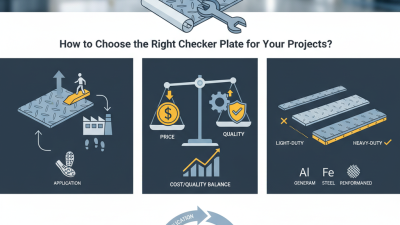
5 Tips for Choosing the Best Checker Plate?
Choosing the right Checker Plate is about more than selecting a raised pattern that looks tough. The plate must suit its location, expected loads, and daily use. A workshop floor, vehicle step, and outdoor platform may need different materials and thicknesses. Small details matter. A plate that feels sturdy in a showroom may behave differently once it faces rain, grit, or repeated impact.
These five tips will help you compare practical options without relying on appearance alone. Consider the base material, plate thickness, tread pattern, surface conditions, and supplier specifications. Check dimensions and product data carefully, and ask how the plate will be supported and installed. Raised patterns can improve grip, but they do not guarantee slip resistance in every condition. Oil, mud, and worn footwear can still create hazards. That part is easy to underestimate.
There is no single best choice for every project. An aluminum plate may help reduce weight, while steel may suit applications requiring greater rigidity; the right answer depends on the design and environment. Corrosion resistance, cleaning needs, and maintenance also deserve attention. I have seen buyers focus on the pattern first, then discover that thickness or fit was the real issue. A little reflection helps. Use the points below to make a more informed shortlist, then confirm that the selected Checker Plate matches the manufacturer’s documented ratings and the demands of its intended use.
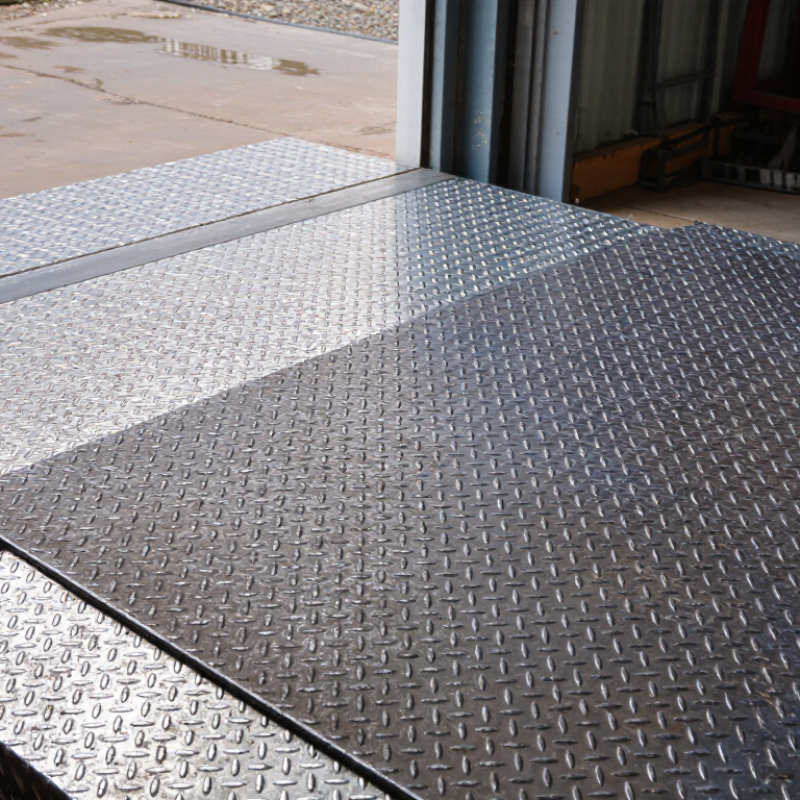
Identify the Intended Use and Required Load Capacity
Before selecting checker plate, define where it will be used. A workshop walkway, loading ramp, and vehicle step face different conditions. List the expected loads, including people, carts, or equipment. Consider whether the load stays in one place or moves across the plate. A rolling wheel or dropped object can create more stress than a steady load. That difference matters.
Tip: Check the full support setup, not just the plate thickness. Material, panel size, unsupported span, and support spacing all affect capacity. Compare your measurements with a load table for the exact product and installation conditions. If the table does not match your setup, ask a qualified engineer or supplier for guidance. Guessing is risky.
It is easy to focus on the raised pattern; that is not the load-bearing story. A thicker plate may still flex if its supports are too far apart. Measure the clear span and note how the edges will be fixed. Include a safety margin for changing loads and everyday wear. I have seen small measurement assumptions complicate a simple selection. Recheck them before ordering.
Choose a Material for Strength and Corrosion Resistance
A checker plate’s raised pattern helps provide grip, but the base metal determines much of its strength and corrosion resistance. Carbon steel is often chosen for heavy-duty floors, ramps, and work platforms. It handles substantial loads when its thickness and support spacing are correctly specified. It is not rust-proof. Scratches, cut edges, and trapped water can expose bare steel, so protective coatings and regular checks matter.
Stainless steel can suit wet or washdown areas, where rust resistance is a priority. The right grade depends on exposure: salty spray and cleaning chemicals may challenge some stainless steels. Crevices around fasteners can also hold moisture. Small details count. Aluminum checker plate is lighter and naturally forms a protective oxide layer, making it useful where lower weight matters. Yet it is generally less stiff than steel at comparable thickness, so a panel may flex more underfoot.
Match the material to the actual setting, not just the product label. A loading-bay plate faces different risks from a vehicle step exposed to road salt. Check the expected load, plate thickness, support spacing, cleaning routine, and contact with other metals. Dissimilar metals can encourage galvanic corrosion when moisture bridges them; insulating washers may help. One detail is easy to miss: a corrosion-resistant surface does not compensate for an undersized plate. I would also question assumptions about “maintenance-free” materials. Conditions vary, and the edges often tell the story first.
5 Tips for Choosing the Best Checker Plate: Strength and Corrosion Resistance
| Tip |
Material to Consider |
Typical Strength Reference |
Corrosion Resistance |
Practical Selection Guidance |
| 1. Match strength to the load. |
Carbon steel plate, such as ASTM A36 |
Minimum yield strength: about 250 MPa; tensile strength: 400–550 MPa. |
Low when unprotected; moisture can cause rust. |
Consider it for heavy-duty floors and ramps where strength and cost matter. Specify a suitable coating or maintenance plan for exposed service. |
| 2. Choose aluminum for lower weight and good corrosion resistance. |
5052-H32 aluminum |
Typical minimum yield strength: about 193 MPa; tensile strength: about 228 MPa. |
Good resistance to many atmospheric and marine environments; performance still depends on exposure and contact with other metals. |
A common option for vehicle floors, walkways, and areas where reducing weight is valuable. Check the required load capacity before specifying it. |
| 3. Consider a stronger aluminum alloy when loads are higher. |
6061-T6 aluminum |
Typical minimum yield strength: about 240 MPa; tensile strength: about 290 MPa. |
Good general corrosion resistance, but it may be less suitable than 5052 for some marine exposures and forming applications. |
Useful when a higher strength-to-weight ratio is needed. Confirm the product form, temper, fabrication requirements, and exposure conditions. |
| 4. Use stainless steel for demanding, wet environments. |
304 stainless steel |
Common ASTM A240 minimums: yield strength about 205 MPa; tensile strength about 515 MPa. |
Good resistance in many indoor and general atmospheric environments; it can pit in chloride-rich conditions. |
Consider it for clean, wet, or frequently washed areas. For coastal or salt-exposed locations, evaluate a more chloride-resistant grade. |
| 5. Upgrade for chloride exposure and verify the full specification. |
316 stainless steel |
Common ASTM A240 minimums: yield strength about 205 MPa; tensile strength about 515 MPa. |
Generally better resistance to chloride pitting than 304 because it contains molybdenum; it is not immune to corrosion. |
Consider it for marine or salt-exposed service. Before ordering, confirm checker pattern, thickness, finish, applicable standard, and whether the design load is met. |
| Note: Strength figures are indicative minimums for the stated alloy and temper under commonly used material specifications; actual values vary by specification, product form, thickness, and supplier. Corrosion performance depends on the environment, surface condition, and maintenance. Have load-bearing applications checked against the applicable design requirements. |
Select the Right Plate Thickness and Dimensions
Choosing checker plate thickness starts with the load, support spacing, and material. The raised pattern improves grip, but it should not be treated as extra structural thickness. Confirm whether a supplier’s measurement refers to the base metal or total height. Small detail. Big difference. The AISC Steel Construction Manual gives steel a design density of about 7,850 kg/m³; the Aluminum Association’s Aluminum Design Manual uses about 2,700 kg/m³ for aluminum. At 5 mm base thickness, that is roughly
39 kg/m² for steel
and
13.5 kg/m² for aluminum,
before pattern height and production tolerances. Check actual product data before estimating handling weight.
Dimensions matter just as much. Measure the unsupported span between supports, panel width, fixing points, and any cut-outs. A wider panel or longer span may flex more, even when the plate feels rigid in your hands. Use manufacturer load tables or have a qualified engineer check the design for concentrated loads, vibration, and wet conditions. Leave practical clearance for installation, but avoid gaps that create trip hazards or allow edges to bounce. I have seen dimension checks rushed; that is an easy mistake to repeat. Specify thickness, alloy or steel grade, surface pattern, and finished dimensions together, then verify the delivered plate against the drawing.
Compare Checker Patterns for Traction and Safety
Checker patterns are not interchangeable; their raised shapes affect how shoes meet the surface. Five-bar plate uses parallel groups of ribs, which can provide a clear grip direction on ramps or steps. Diamond patterns cross in several directions, giving more varied contact as people turn or approach from different angles. That matters.
Raised teardrop or button patterns may suit flat floors where people move in multiple directions. However, pattern height alone does not prove better traction. Water, grease, dust, worn footwear, and the slope can change how a plate feels underfoot. Small details count.
Compare samples in the conditions where they will be used. Walk across them with typical footwear, and check whether the ridges still feel secure when damp. Look closely at the spaces between raised shapes; dirt can collect there and make cleaning harder. A more aggressive pattern may seem safer, but it can also be uncomfortable under carts or difficult to maintain. I would not choose by appearance alone. The ideal pattern depends on movement, exposure, cleaning routines, and the people using the surface. A quick trial can reveal issues a product sheet may miss.
Review Surface Finish, Standards, and Product Quality
5 Tips for Choosing the Best Checker Plate?
A sound choice starts with the surface, not just the pattern. Look for even ridges, clean edges, and a finish suited to the setting. A quick glance can fool you. Check for burrs, deep scratches, uneven coating, or patches of discoloration that may signal poor handling. For wet or dirty areas, consider how easily the surface can be cleaned and whether the finish provides suitable grip. More aggressive patterns are not always better; they can trap debris.
Ask which material grade, temper, thickness, and dimensional tolerances are being supplied. Standards vary by material and market, so request the applicable specification rather than assuming one label covers every plate. Review the inspection documents, and make sure their details match the product and order. If a certificate lists a different thickness or grade, pause and clarify. Small paperwork mismatches deserve attention.
Check product quality with a sample or a careful incoming inspection. Measure thickness at several points, compare plate dimensions, and look for warping that could complicate installation. Confirm that the checker pattern is consistent and that edges arrive protected. Packaging matters. Scraped corners can undermine an otherwise acceptable finish. Supplier records and clear traceability help, though I would still verify the actual shipment; paperwork alone is not proof.