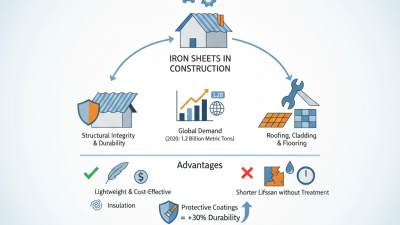
Corrugated Steel is shaped with repeating ridges and valleys, creating a stronger profile than a flat sheet of similar thickness. This geometry helps roofing panels, wall cladding, drainage pipes, grain bins, and temporary structures resist bending. You can see its practical value in a warehouse roof: overlapping panels shed rain, while raised ribs reduce flexing under wind and maintenance loads.
The World Steel Association reported approximately 1.89 billion tonnes of crude steel production worldwide in 2023. Its World Steel in Figures 2024 also identifies construction and infrastructure as major steel-consuming sectors. These figures explain why corrugated products remain common in industrial and agricultural projects. They do not, however, measure corrugated steel alone. That distinction matters.
Material selection requires more than checking appearance. ASTM A653 covers zinc-coated steel sheet, while ASTM A792 covers aluminum-zinc alloy-coated sheet. Coating type, base-metal thickness, rib height, fastening method, and local weather exposure all affect service life. The American Iron and Steel Institute provides design guidance for cold-formed steel, which supports more consistent engineering decisions.
In practice, galvanized corrugated steel may suit a farm building with moderate exposure. A higher-performance coating may be wiser near coastal air. Small installation errors can still cause leaks. Overlapping sheets, exposed fasteners, and cut edges need careful inspection. Reports provide useful benchmarks, but project conditions often prove less tidy than the brochure suggests. This guide explains what Corrugated Steel is, how it is manufactured, and where its strength, durability, and limitations matter most.
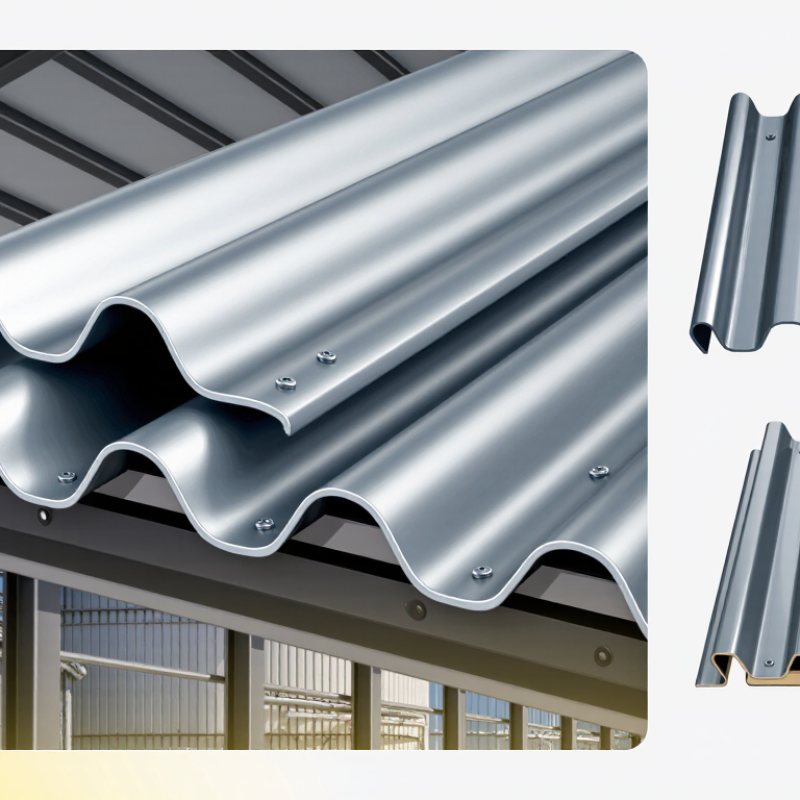
Corrugated steel is sheet steel formed into repeating ribs, creating stiffness without adding much material. It is not flat. The profile improves spanning, drainage, and resistance to bending. However, corrugation alone does not define structural safety. ASTM A653/A653M primarily governs hot-dip zinc-coated or zinc-iron alloy-coated carbon steel sheet, including coating mass, grade, and mechanical properties. A common G90 coating represents 0.90 ounces per square foot, or about 275 grams per square metre, across both surfaces.
AISI S100 provides the design framework for cold-formed steel members made from these sheets. Its methods address local, distortional, and global buckling. Designers also check connection strength, screw pull-out, bearing, wind uplift, and live loads. That detail matters. A panel may meet its material specification yet perform poorly with weak fasteners or unsupported edges. Corrugation geometry, thickness, yield strength, and span must be read together. Specifications can look complete, while field conditions remain messier.
Typical uses include roofing, wall cladding, agricultural buildings, light structural framing, decking, and drainage components. The scale is substantial: the World Steel Association reported approximately 1.89 billion metric tonnes of crude steel production worldwide in 2023. That figure shows the material’s industrial reach, not a guarantee of service life. In practice, exposed edges, trapped moisture, coastal salts, and damaged coatings can shorten performance. Engineers should verify the exact ASTM coating designation and apply AISI S100 checks to the actual load path, not merely the sheet profile.

Corrugated steel is flat sheet formed into repeating ridges and valleys. Common uses include roofing, wall cladding, drainage pipes, grain bins, and protective enclosures. The profile changes the sheet’s behavior. A flat panel can flex easily across a wide span. A corrugated panel resists bending because its folds increase its effective depth. This is similar to a shallow beam.
The steel itself is not necessarily thicker. The geometry does more work. Ridges move material farther from the panel’s neutral axis, improving stiffness with only a small weight increase. Corrugation also helps distribute loads across neighboring ribs. Still, it is not magic. Unsupported edges, poor fasteners, wind uplift, and trapped moisture can cause failure. The right profile depends on span, load direction, climate, and support spacing. Field measurements matter. In practice, small installation errors can create visible waviness, even when the sheet specification looks adequate.
Tips: Match the corrugation depth to the expected span. Use compatible fasteners and sealing washers. Keep overlaps tight and free from debris. Check cut edges for exposed steel. In wet or coastal areas, specify suitable corrosion protection. Do not assume a deeper profile always performs better; connection details may control the result.
Corrugated steel is formed from flat sheet steel into repeating ribs and valleys. The shape increases stiffness without adding much material. It is commonly used for roofing, siding, wall panels, drainage components, and protective enclosures.
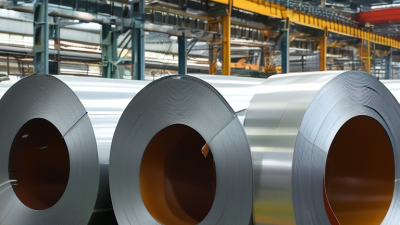
Manufacturing begins with a continuous steel coil. In a roll-forming line, paired rollers gradually bend the sheet into its profile. Each station makes a small change, reducing sharp stress and surface damage. Cutting equipment then trims panels to specified lengths. Operators must control line speed, roller alignment, and sheet tension. Small errors can create uneven ribs or difficult overlaps. The process appears simple, but it is not perfectly forgiving.
ASTM A653 G90 refers to galvanized steel sheet with a zinc coating of 0.90 ounces per square foot, measured across both sides. This equals approximately 275 grams per square meter. Zinc protects the underlying steel by forming a barrier and corroding preferentially when the surface is scratched. G90 is useful, but it is not rust-proof. Cut edges, trapped moisture, and damaged fastener areas still need attention. Proper slope and ventilation matter in real installations. One detail is easy to underestimate: coating thickness can vary slightly across a coil. For demanding projects, thickness checks and clear inspection records support more reliable decisions.
Corrugated steel is commonly produced by roll forming flat galvanized sheet into a ribbed profile. The ASTM A653 G90 designation specifies a nominal total zinc coating mass of 275 g/m² across both sides of the sheet. Higher coating designations provide more zinc for improved corrosion protection, depending on the exposure conditions and design requirements.
Reference: ASTM A653/A653M coating designations. Values shown are nominal total coating masses for both sides.
Corrugated steel is sheet steel pressed into repeating ridges and valleys. Those folds increase stiffness without making the panel excessively heavy. Galvanized or coated surfaces help resist moisture, scratches, and outdoor exposure. The actual service life depends on coating quality, drainage, fasteners, and local climate. That detail is easy to underestimate.
On roofs, panels shed rain quickly when installed with proper slope and overlap. Sealed fasteners and correctly placed flashing protect joints around vents, walls, and edges. For siding, vertical or horizontal profiles create a clean, durable exterior. They also protect framing from wind-driven rain. Poorly cut edges can rust sooner. As fencing, corrugated steel offers privacy, wind resistance, and a long-lasting barrier. Posts must be aligned carefully, because flexible panels can show every error.
In drainage work, it forms culverts, channels, and protective liners for controlled water flow. Engineers must match panel strength to soil pressure, water volume, and burial depth. For barns, sheds, and other farm buildings, steel covers walls and roofs with relatively little maintenance. It tolerates dust, sun, and changing temperatures, but condensation remains a concern. Ventilation and insulation matter, especially where livestock, feed, or machinery are stored. I would not describe corrugated steel as maintenance-free. Loose screws, trapped leaves, and damaged coatings still need attention. A practical inspection each season can reveal small problems before water enters.
What Is Corrugated Steel and What Is It Used For?
Corrugated steel is sheet steel formed into repeated ribs for greater stiffness. It is used for roofs, wall cladding, sheds, warehouses, and agricultural buildings. The profile helps the sheet resist bending, but it does not replace proper structural design. On site, workers often choose it for quick installation and low maintenance. The result depends heavily on accurate specification.
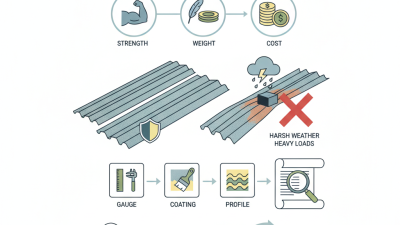
Gauge is an early decision, but gauge labels can vary between regions. Confirm the actual base-metal thickness in millimetres. A thicker sheet may handle impact better, while a deeper rib usually improves stiffness. Rib profile also affects appearance, fastener placement, drainage, and usable span. Never select span from profile depth alone. Check support spacing, snow, wind, maintenance loads, and permitted deflection. Small errors can create visible sagging.
Coating mass should be stated in grams per square metre for both sides. Higher coating mass generally offers longer protection, especially where moisture remains trapped. Corrosion exposure matters more than appearance. Coastal air, industrial pollution, animal housing, and frequent condensation demand careful material selection. Protect cut edges and avoid incompatible fasteners. Field inspections often find scratches around overlaps and poorly sealed penetrations. These details are easy to dismiss, yet they can start corrosion. I would also question any specification that gives a coating mass but ignores drainage and ventilation. The sheet is only one part of the envelope.
| Typical Application | Recommended Base-Metal Thickness | Common Rib Profile | Typical Support Span | Typical Coating Mass | Suitable Corrosion Exposure | Key Specification Considerations |
|---|---|---|---|---|---|---|
| Residential roofing and wall cladding | 0.45–0.60 mm Approximately 26–24 gauge, depending on the gauge system |
Low-profile corrugation, commonly about 18–20 mm deep | About 0.60–0.90 m between supports | Approximately 100–275 g/m² total zinc coating, depending on the exposure and product standard | Low to moderate exposure; rural, suburban, or lightly industrial environments | Use adequate side and end laps, compatible fasteners, and a roof pitch that limits ponding. Confirm load capacity for wind, snow, and maintenance access. |
| Agricultural buildings and equipment shelters | 0.50–0.75 mm Approximately 26–22 gauge |
Corrugated or trapezoidal profile, generally 18–35 mm deep | About 0.75–1.20 m between supports | Approximately 180–350 g/m² total zinc or zinc-aluminium coating | Moderate exposure; humidity, dust, fertilizer, and animal-waste atmospheres require additional care | Ventilation is important. Avoid prolonged contact with wet manure, treated timber, copper, or dissimilar metals. Select a coating system suitable for ammonia and chemical exposure where necessary. |
| Industrial wall cladding | 0.60–0.90 mm Approximately 24–20 gauge |
Trapezoidal or box-rib profile, commonly 35–50 mm deep | About 1.00–1.80 m between supports | Approximately 275–450 g/m² total metallic coating | Moderate to high exposure; urban, industrial, or coastal locations | Check span tables, fastener pull-out, thermal movement, condensation control, and compatibility with insulation, sealants, and flashings. |
| Long-span roofing | 0.75–1.20 mm Approximately 22–18 gauge |
Deep trapezoidal profile, commonly 50–100 mm deep | About 1.50–3.00 m between supports, subject to engineering design | Approximately 275–450 g/m² total metallic coating | Moderate to high exposure, provided drainage and detailing are properly designed | Greater rib depth improves bending strength but does not replace structural calculations. Verify deflection, uplift, fastener spacing, lap details, and concentrated-load resistance. |
| Coastal or marine-influenced buildings | 0.60–0.90 mm Approximately 24–20 gauge |
Corrugated or trapezoidal profile selected for the required structural span | Typically 0.75–1.50 m, based on wind uplift and profile capacity | Prefer a higher metallic coating mass, often 275–450 g/m², with a compatible protective finish | High chloride exposure; salt spray and persistent marine humidity | Use corrosion-resistant fasteners and carefully sealed cut edges. Avoid water traps, provide drainage, and maintain separation from copper and other incompatible metals. |
| High-corrosion industrial facilities | 0.75–1.20 mm Approximately 22–18 gauge |
Deep trapezoidal or structural profile | Approximately 1.00–2.50 m, subject to site-specific structural design | Typically 350–600 g/m² total metallic coating or a specified duplex coating system | Very high exposure; chemical processing, persistent condensation, or aggressive industrial atmospheres | Specify the corrosion category, chemical contaminants, wash-down conditions, edge protection, coating compatibility, inspection intervals, and a suitable design service life. |
| Temporary barriers, fencing, and site screens | 0.40–0.60 mm Approximately 28–24 gauge |
Light corrugated or shallow trapezoidal profile | About 0.60–1.00 m between supports | Approximately 100–275 g/m² total metallic coating | Low to moderate exposure; generally short-term service | Design for wind pressure and handling damage. Protect sharp edges, provide secure fixings, and do not use temporary-sheet span assumptions for permanent structures. |
| Specification note: Corrugated steel is a flat steel sheet formed into repeating ribs or corrugations to increase stiffness and improve drainage. The values above are indicative selection ranges, not a substitute for manufacturer span tables or structural calculations. Gauge numbers vary by regional standard, so the base-metal thickness in millimetres should control the specification. Coating mass is expressed as the total coating on both sides unless the applicable standard states otherwise. | ||||||